Flag basics
American Flag Coloring Page: 50 Stars, an Eagle and Lady Liberty
An American flag coloring page with all 50 stars, plus a big-star flag for toddlers, color by number, a porch flag, a parade drum, an eagle and Lady Liberty.
· 6-minute read


Product links go to Creative Fabrica, where independent designers sell their files. They are affiliate links: if you sign up or buy after clicking one, this site may earn a commission, and your price does not change.
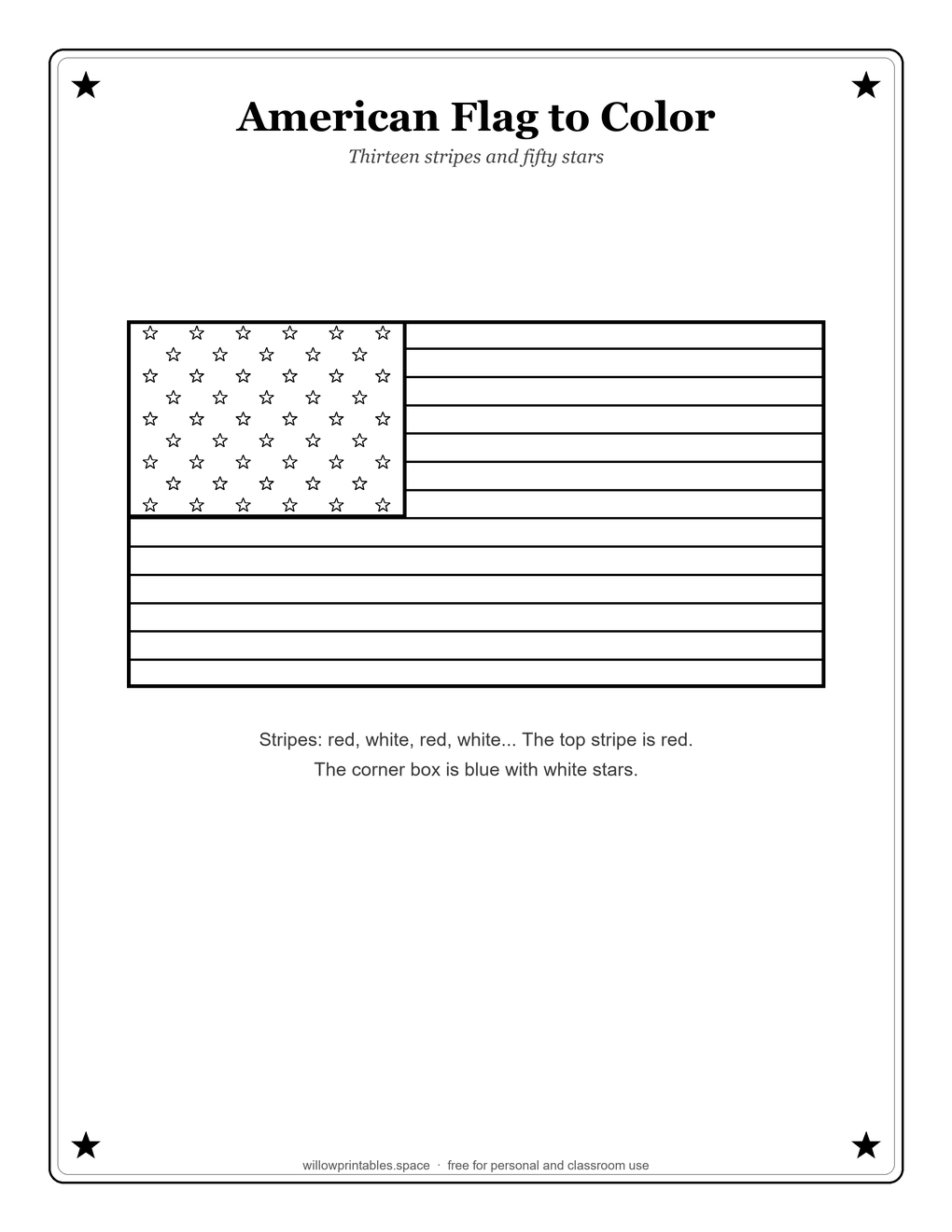
The main page in this set is a true-to-life American flag: 13 stripes and a blue field holding 50 stars in nine rows, the same layout as the flag on the porch next door. Seven more sheets come with it: a big-star flag for toddlers, a color-by-number flag, a flag snapping on a pole, a house with a flag and bunting on the porch, a parade drum, an eagle on a rock and the Statue of Liberty.
Print the single sheet you need for Flag Day or the Fourth, or the eight together for a long weekend.
Our Free Pages: 8 to Print
Tap a page for its PDF. Ink-only line art on Letter paper, yours to print for the family or the whole class.
Whole set as one PDFAll 8 pages in one PDF.
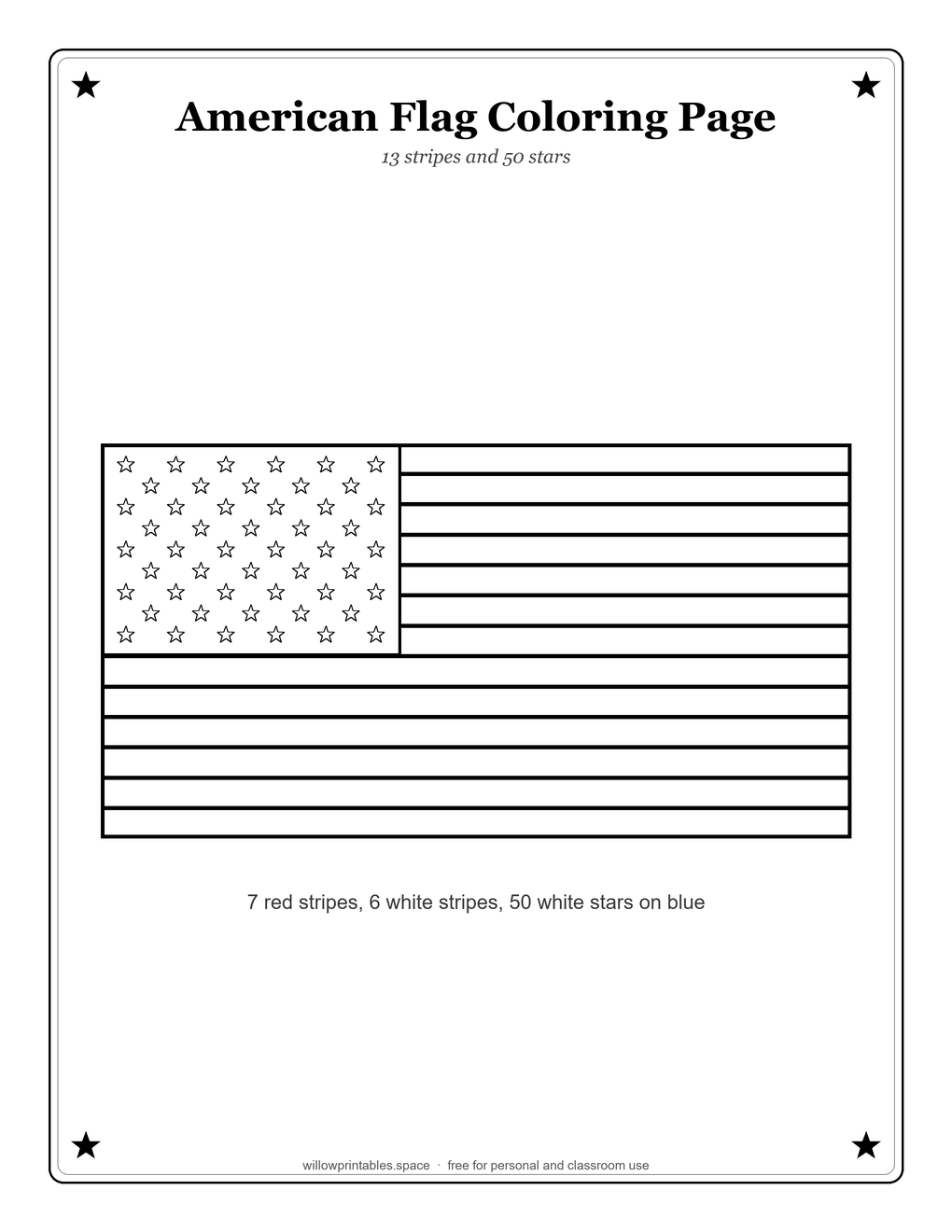
1American Flag Coloring Page
13 stripes and 50 stars
2Simple Flag for Little Ones
Big stars, wide stripes
3Color the Flag by Number
1 is red, 2 is white, 3 is blue
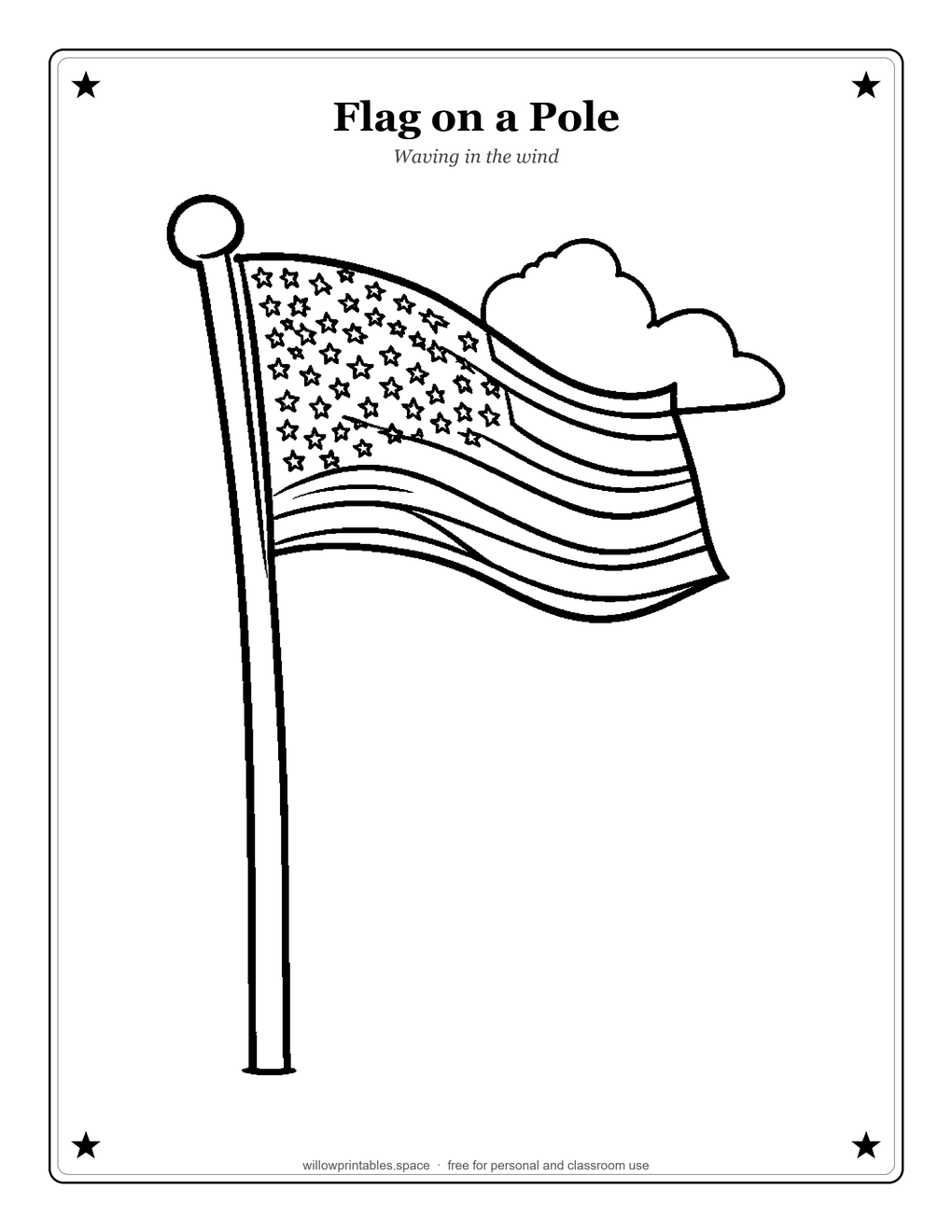
4Flag on a Pole
Waving in the wind
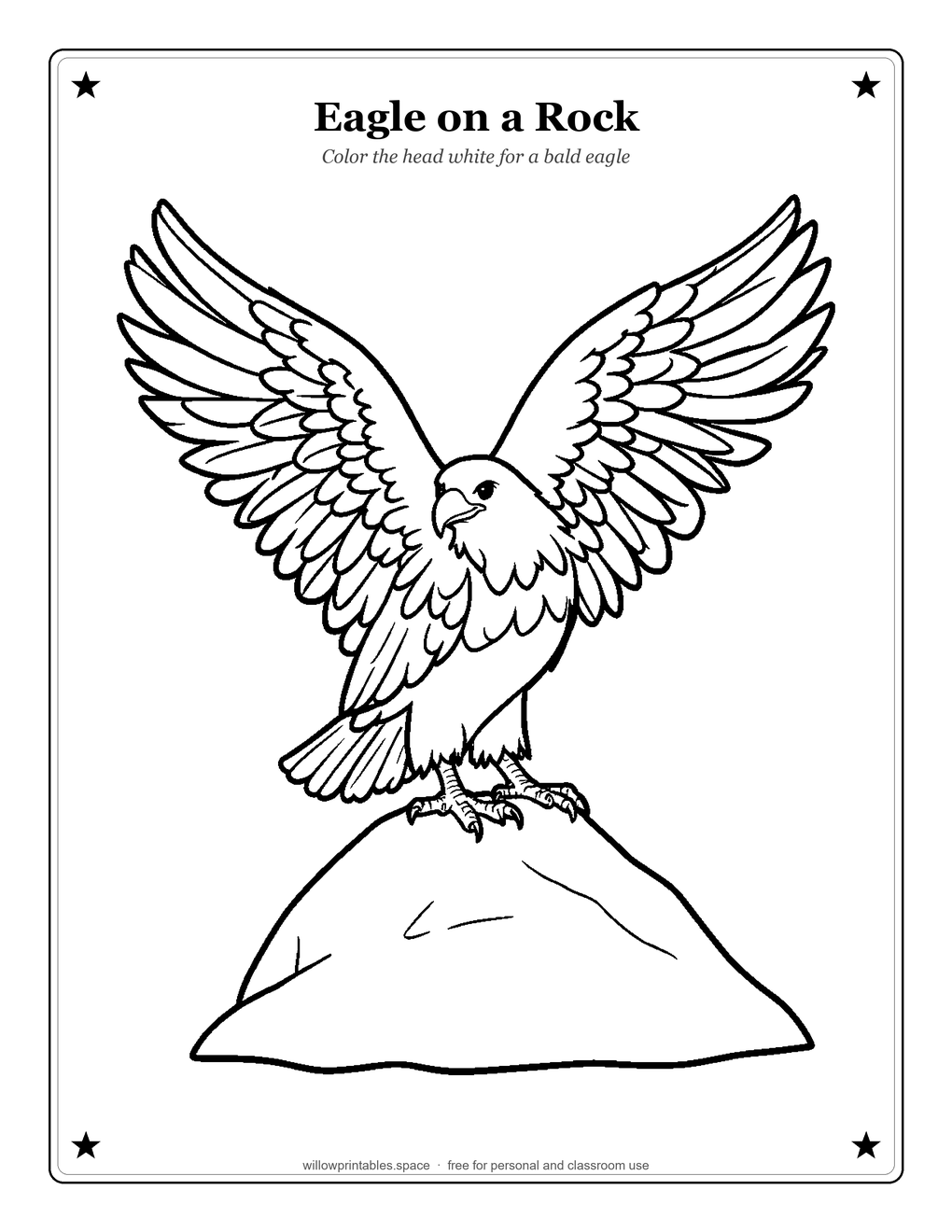
5Eagle on a Rock
Color the head white for a bald eagle
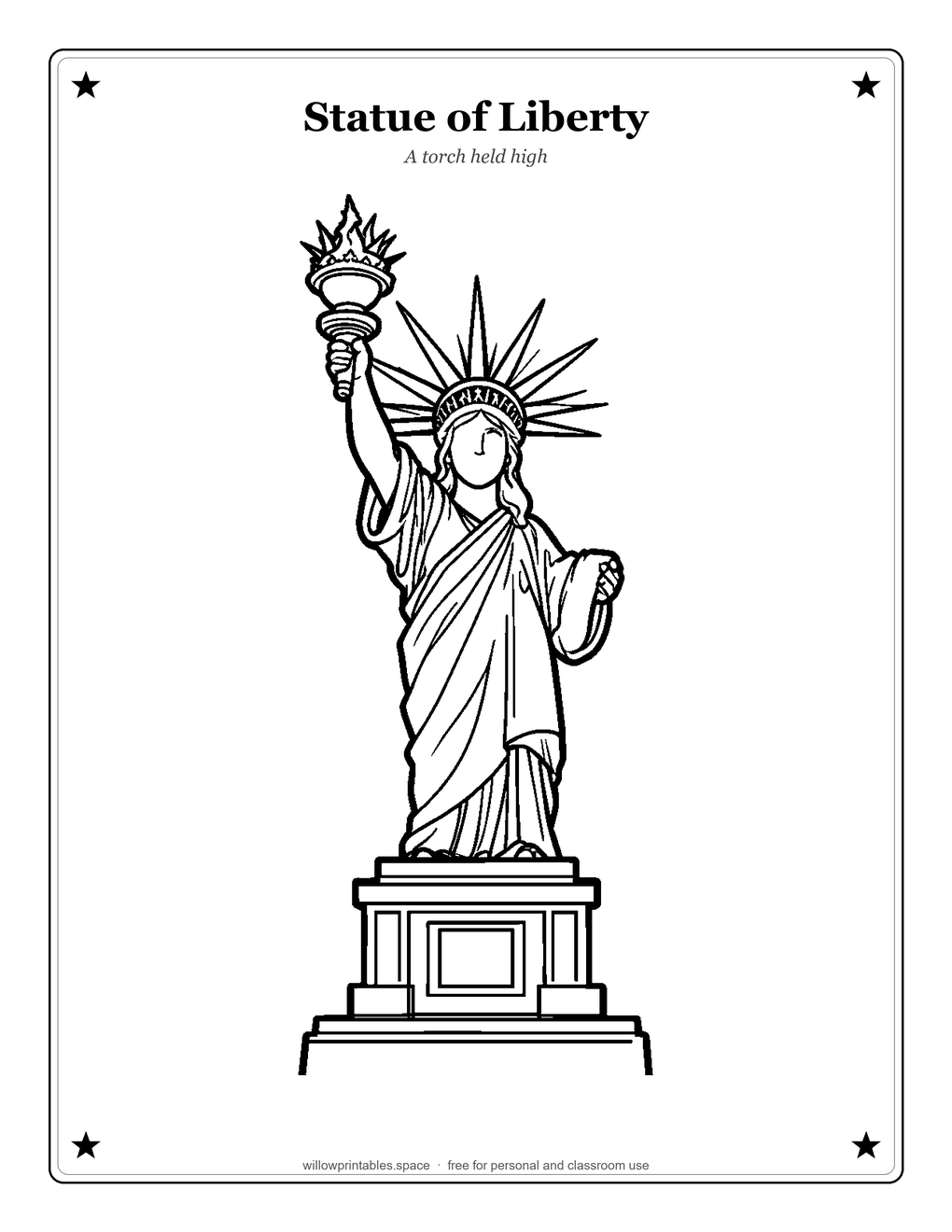
6Statue of Liberty
A torch held high
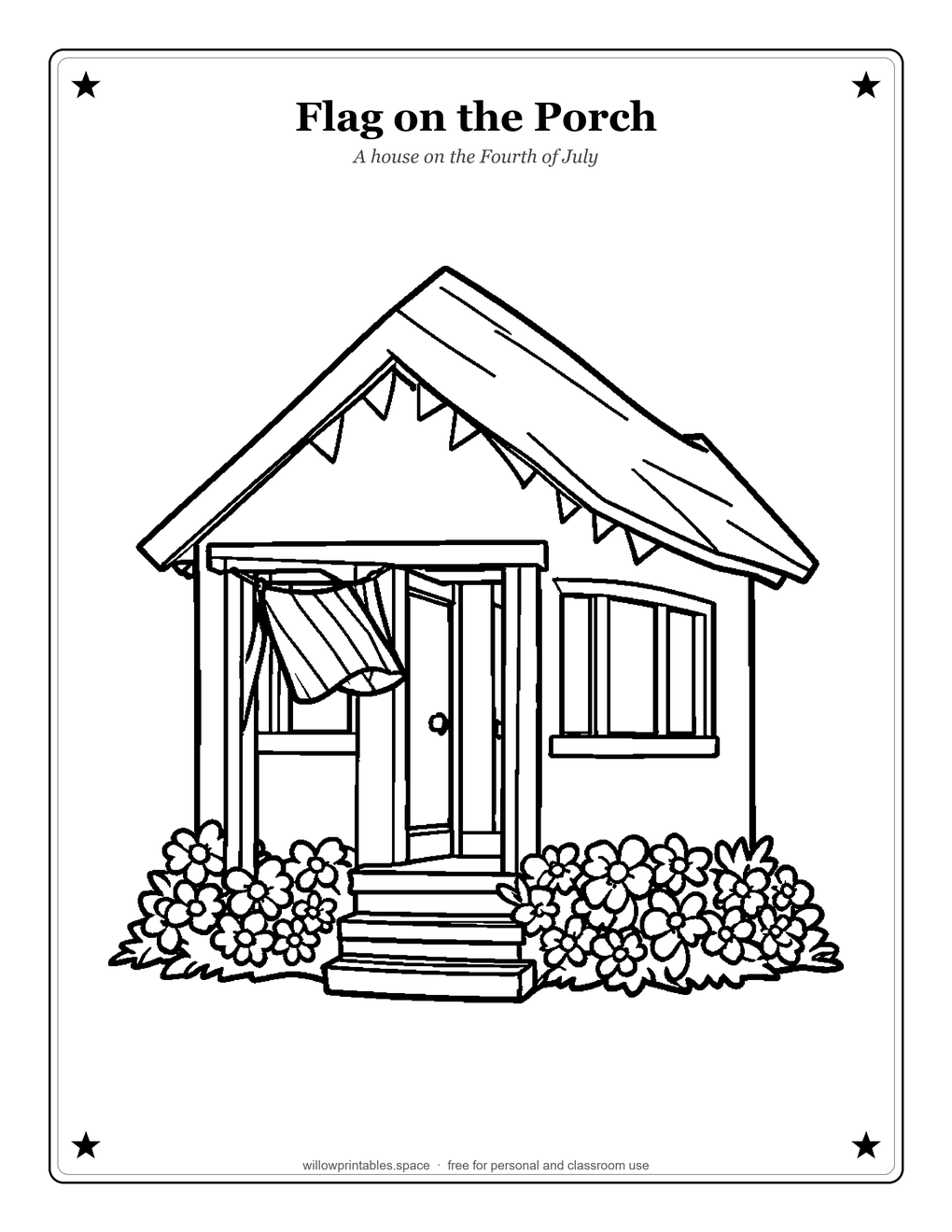
7Flag on the Porch
A house on the Fourth of July
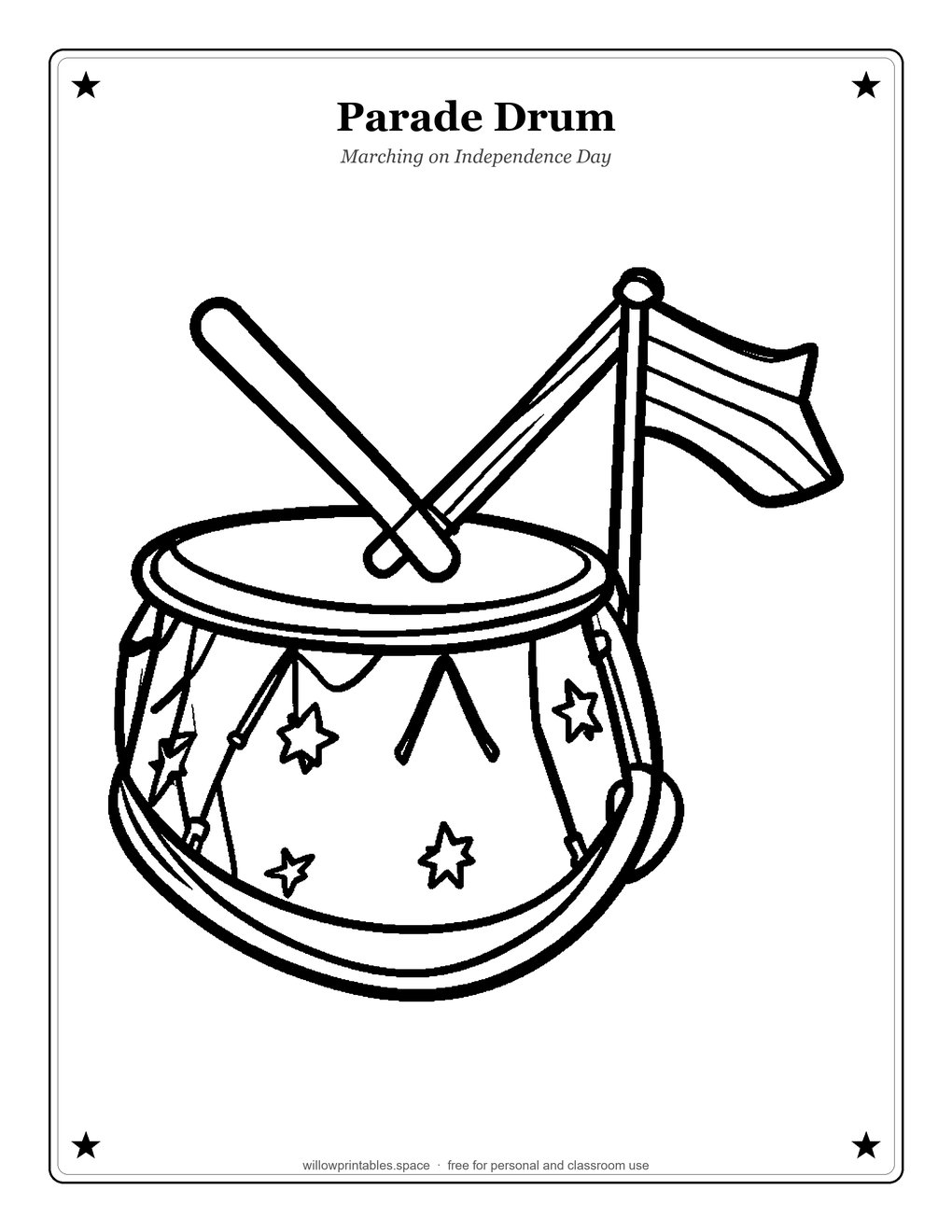
8Parade Drum
Marching on Independence Day
Eight Sheets, Simplest First
| Sheet | In the picture | Ages |
|---|---|---|
| Simple Flag for Little Ones | 12 big stars, wide stripes | Toddlers and preschoolers |
| Color the Flag by Number | Stripes marked 1 and 2, the blue field marked 3 | Ages 4 and up |
| Parade Drum | A drum, drumsticks and a small flag | Ages 4 and up |
| Flag on a Pole | A waving flag and clouds | Ages 5 and up |
| Flag on the Porch | A house with bunting and flowers | Ages 5 and up |
| Eagle on a Rock | An eagle with its wings spread | Ages 6 and up |
| Statue of Liberty | The statue with her torch held high | Ages 6 and up |
| American Flag | 13 stripes, 50 small stars | Ages 7 and up |
How the Flag Is Laid Out
The first page follows the real flag, so it doubles as a lesson.
- 13 stripes, running side to side: 7 red and 6 white. Red is at the top and at the bottom, and the colors take turns in between.
- A blue rectangle in the upper left corner, called the canton or the union. It reaches down over the top 7 stripes.
- 50 white stars on the blue, in 9 rows. The rows take turns too: 6 stars, then 5, then 6, ending with a row of 6. Five rows of 6 and four rows of 5 make 50.
Children who like numbers can count each part before they start. It is a good check that nothing gets colored the wrong way.
What the Stripes and Stars Stand For
The 13 stripes stand for the 13 original colonies that declared independence from Great Britain in 1776 and became the first states.
The 50 stars stand for the 50 states today, one star for each.
That is why the stripes stayed at 13 while the stars kept changing. As new states joined, stars were added to the flag. Hawaii became the 50th state on August 21, 1959, and the 50-star flag became official on July 4, 1960. It has been the flag ever since, longer than any version before it. The 48-star flag flew for 47 years, from 1912 to 1959, and the 49-star flag for just one, after Alaska joined.
A Little Flag History for Kids
A few facts that fit into one coloring session:
- Flag Day, June 14, marks the day in 1777 when the Continental Congress resolved that the flag would have 13 stripes, alternating red and white, and 13 white stars on a blue field. President Wilson proclaimed the day in 1916, and Congress made National Flag Day official in 1949.
- The first flags had 13 stars, one for each colony. Early flags arranged them in different ways, sometimes in a circle.
- The flag changed many times as states joined. Your grandparents may remember a flag with 48 stars.
- There are rules for a real flag, called the U.S. Flag Code. One that children can follow easily: the Flag Code says the flag should never touch anything beneath it, such as the ground, the floor or water.
The eagle page is a chance to talk about the bald eagle. It has been on the Great Seal of the United States since Congress adopted the seal in 1782 and has long served as the national emblem, but it became the official national bird only in December 2024, when a law passed by Congress was signed. Despite the name, a bald eagle is not bald: "bald" is an old word for white, and its head is covered in white feathers. Color the head and the tail white, the body dark brown and the beak and feet yellow, as on an adult bird.
The Statue of Liberty was a gift from the people of France, dedicated on October 28, 1886, and stands in New York Harbor. She holds a torch in her raised right hand and a tablet in her left, inscribed JULY IV MDCCLXXVI: July 4, 1776 in Roman numerals. Today she is a soft green, but she was the reddish brown of new copper when she was built. Air, rain and salt water slowly turned the copper green; by 1910 she was about half green, and the change was complete about a decade later. Children can choose either color, and now they know why both are right.
When to Use These Pages
- Flag Day, June 14.
- Memorial Day, the last Monday in May under the Uniform Monday Holiday Act of 1968, a day to remember those who died serving in the military. The flag on a pole or the porch flag suits a quiet moment of coloring.
- The Fourth of July. The parade drum and the porch flag are made for it.
- Veterans Day, November 11, the date of the 1918 armistice that ended the fighting of World War I, to thank all who served, living and deceased. A colored flag makes a good card for a family member or neighbor who is a veteran.
- Constitution Day, September 17, the day the Constitution was signed in 1787. Federal law asks every school that receives federal funds to hold a lesson on the Constitution around that date.
- Any civics lesson on symbols of the United States: the flag, the eagle, the Statue of Liberty.
For the Fourth itself, our 4th of July coloring pages add fireworks, an Uncle Sam hat and ice pops.
Getting Around 50 Little Stars
The blue corner is where most kids get stuck. A few ways through it:
- Reach for a pencil, not a marker. A blue colored pencil with a light touch can work around each tiny star; a marker or crayon tends to flood over them. Go row by row.
- Ring the stars first. Draw a small blue circle around every star, then fill the gaps between the circles.
- Skip the white. White stars and white stripes need no color at all. The paper already is the flag's white.
- Rule the red. Hold a ruler along the edge of each red stripe and color up to it.
- Start little ones on the big-star flag. Its 12 stars and fat stripes are a simplified design, not the real count, for hands not ready for 50 small stars.
- Use color by number as the middle step. That page shows the full flag with each area numbered, so it sits between the big-star version and the plain one.
Supplies for a Flag Day Table
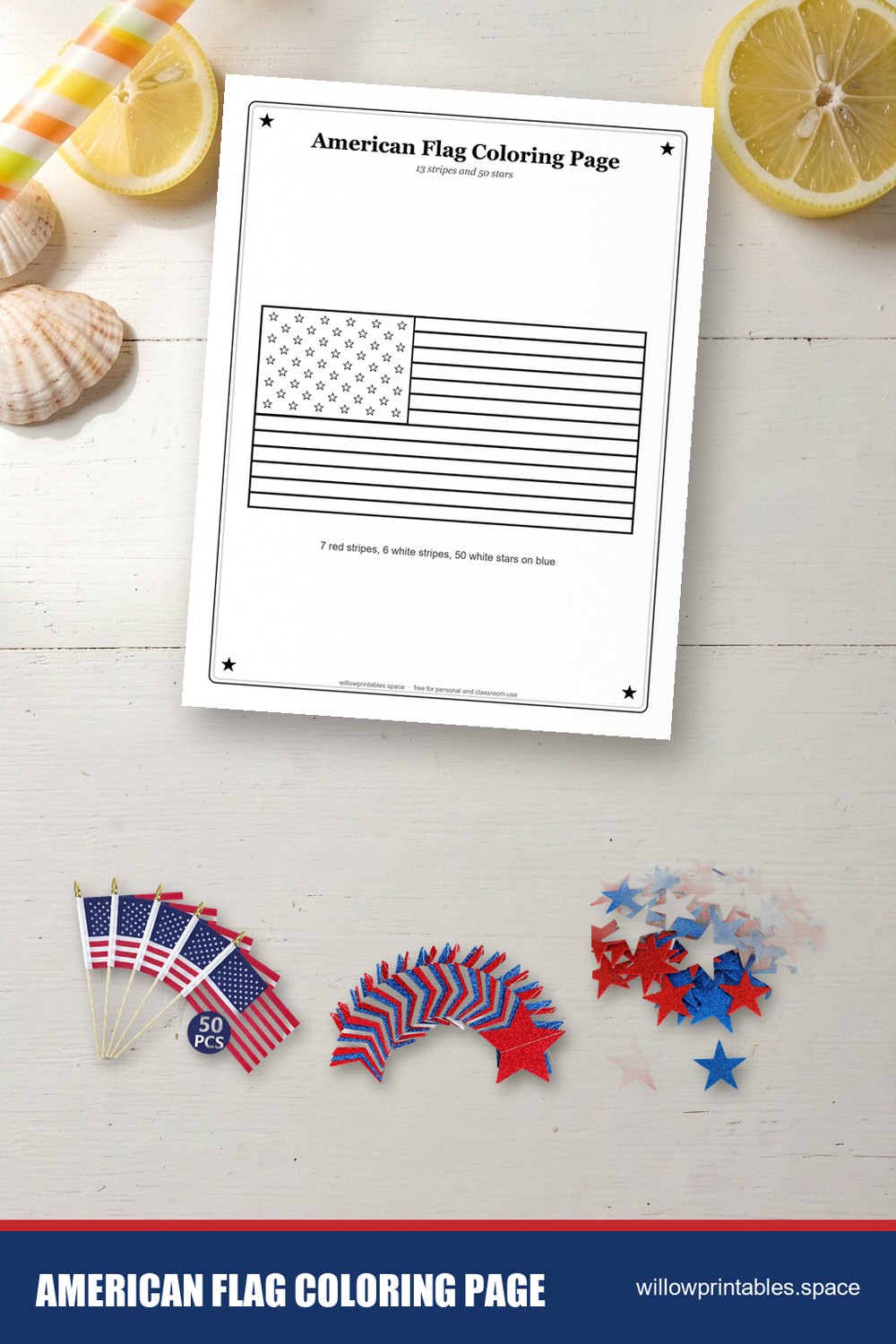
Handy to Have on the Table
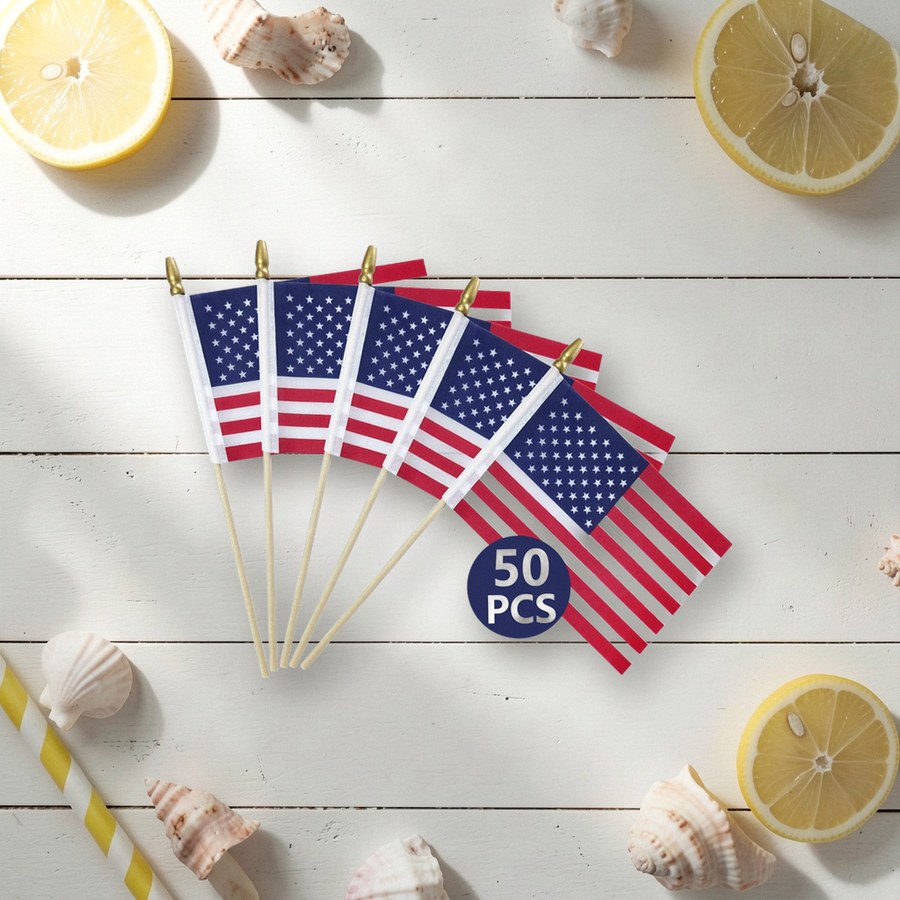

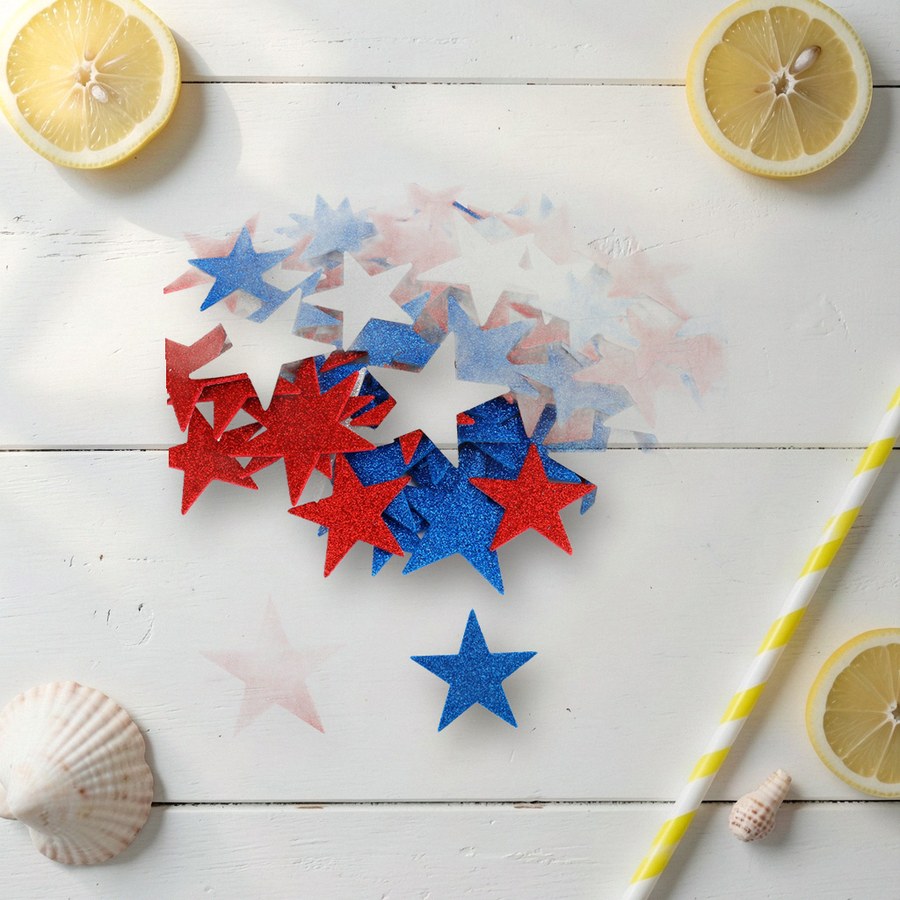
As an Amazon Associate we earn from qualifying purchases.
Small flags on sticks let children compare their page with a real flag while they color. Star stickers are a quick finish for the drum or the porch page when the coloring is done.
More Red, White and Blue
Color flag clipart for yard signs, tees and porch banners, made by independent designers, lives on our 4th of July and patriotic designs shelf.
Cards and signs for Memorial Day and Veterans Day are on a shelf of their own.
Our 4th of July crafts for preschoolers include star templates and a pinwheel. Heading out for the holiday weekend? Bring the camping coloring pages too.